
Surface area of a triangular prism
Calculating the surface area of a triangular prism is a key skill for architects designing A-frame roofs and engineers creating unique packaging, like chocolate boxes. It allows us to measure the exact amount of material needed to cover every side of the 3D shape. Jump to the questions
Practise now
Worksheet preview and key skills
Worksheet preview
Practise surface area of a triangular prism with this self-marking maths worksheet.
The interactive worksheet below generates questions, gives instant feedback, and lets students record their score.
What you’ll practise
- Identifying the rectangular faces and triangular ends.
- Finding the area of each face.
- Adding all face areas.
- Giving the total surface area in square units.
Use the interactive worksheet below, or read the Topic guide for the method and worked example.
Topic guide
What this worksheet practises
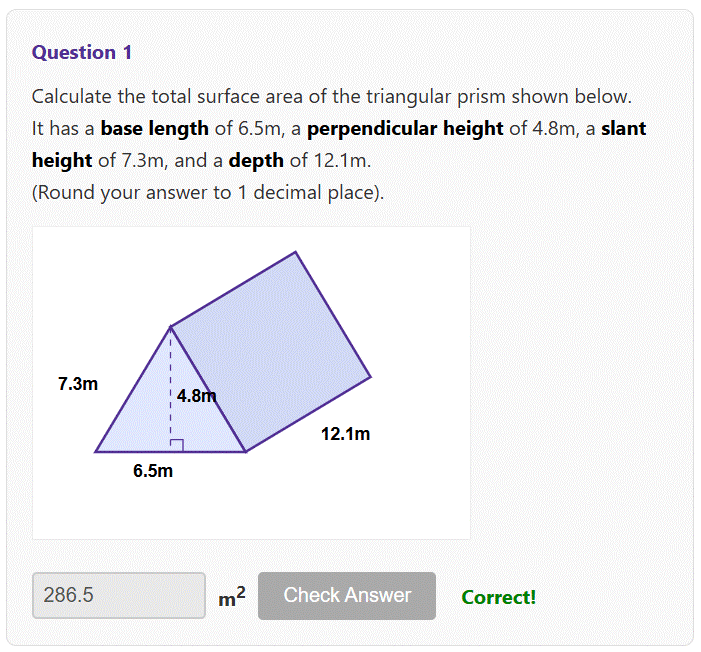
This worksheet provides practice on calculating the total surface area of a triangular prism (a "Toblerone" shape). This is often considered the hardest basic 3D shape because it is made of five faces that use different formulas: two triangles and three rectangles.
Key method
You must systematically calculate the area of all five faces and add them together.
- The Two Triangles: Calculate the area of the triangular front face using (base × vertical height) ÷ 2. Because there is an identical triangle at the back, you then multiply this answer by 2. (Shortcut: Just do base × height!).
- The Bottom Rectangle: Calculate the area of the flat rectangular base the shape sits on (Length × Width).
- The Sloping Rectangles: Calculate the area of the large sloping rectangular side(s). You will need the length of the sloping edge of the triangle to do this. (Sloping edge × length of prism).
- Add all five areas together.
Worked example
A prism has a triangular front face with a base of 6cm, a vertical height of 4cm, and two sloping edges of 5cm each. The length of the prism is 10cm. Find the surface area.
Step 1: The two triangles (front and back).
Front area = (6 × 4) ÷ 2 = 12.
Back area = 12.
Total for triangles = 24.
Step 2: The bottom rectangle.
Base width is 6, length is 10. Area = 6 × 10 = 60.
Step 3: The two sloping rectangles.
Sloping edge is 5, length is 10. Area = 5 × 10 = 50.
Because it's an isosceles triangle, the other sloping side is also 50. Total for slopes = 100.
Step 4: Add them all together.
24 (triangles) + 60 (bottom) + 100 (slopes) = 184.
Total surface area = 184 cm².
Common mistakes to avoid
The biggest mistake is using the vertical height of the triangle to calculate the area of the sloping rectangular sides. The vertical height (e.g. 4cm) is only used for the area of the triangle itself. The sloping sides are physical rectangles, and you must use their physical sloping length (e.g. 5cm) to find their area.
Things to remember
If the front triangle is a right-angled triangle (like a wedge doorstop), the three rectangles will all be completely different sizes. You will have a bottom rectangle, a vertical back rectangle, and one large sloping rectangle on the front. Calculate all three individually.